Back-to-school season is stressful enough for any parent: new schedules, new supplies, new routines. But if you’re raising a child with a chronic condition, a physical disability, or a developmental diagnosis, the season brings an extra layer of logistics: how do you get your child to school and keep every therapy visit, specialist appointment, and follow-up on track?
At Star Nonemergent Transportation, we’ve spent years helping families in Stanislaus and San Joaquin Counties solve exactly this problem. We know that for many parents, special needs transportation isn’t a convenience. It’s the thing that determines whether a child makes it to occupational therapy on time, whether a wheelchair user gets to a specialist appointment safely, or whether a caregiver has to choose between a job shift and a medical visit. This guide breaks down what families should know about coordinating school and healthcare transportation this fall, and how the right partner can take the pressure off. If you’d like to skip ahead and get a ride on the calendar, you can contact us directly to talk through your child’s needs.
Why Does the School Year Change the Transportation Equation?
During summer, most families can build appointments around a flexible schedule. Once school starts, that flexibility disappears. Recurring physical therapy, speech therapy, dialysis, or specialist visits now have to be squeezed between school hours, homework, and extracurriculars and for children with complex medical needs, that squeeze can get tight fast.
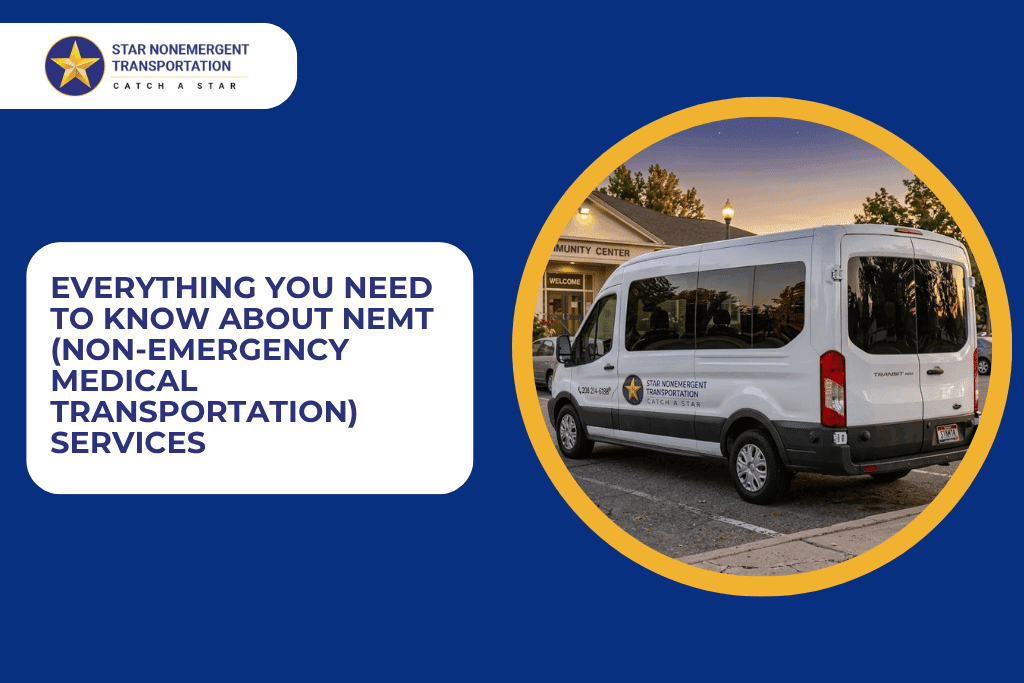
This is where non-emergency medical transportation becomes essential. Non-emergency medical transport, often shortened to non-emergency medical transport (NEMT), refers to scheduled, non-urgent trips to and from medical care the opposite of an ambulance responding to a crisis. NEMT services are built around predictability: a set pickup time, a set destination, and a trained driver who understands mobility equipment and medical sensitivity. For families managing a child’s recurring care alongside a school calendar, that predictability is everything.
The Recurring Appointment Challenge
Children with special healthcare needs rarely have just one appointment a month. A typical week might include physical therapy on Monday, an ABA session on Wednesday, and a check-in with a pediatric specialist on Friday on top of a full school day. Missing any one of these can set a child’s progress back, yet coordinating them all without reliable transport is often the biggest barrier families report.
That’s why we built our recurring-ride model around consistency. Instead of booking a one-off ride every time, families can set up standing schedules for weekly or biweekly therapy visits, so the same trusted process repeats every time no re-explaining a child’s needs, no scrambling the morning of. If your child’s routine includes ongoing sessions at a rehab facility, dialysis center, or outpatient clinic, our Outside Medical Appointments service is designed for exactly this kind of recurring care, keeping treatment plans on schedule even during the busiest school weeks.
Getting Kids to and From Therapy Visits
Therapy visits for children physical, occupational, speech, or behavioral often require more than just a ride. They require a driver who understands that a child may be anxious, non-verbal, or using adaptive equipment, and who can transition a child calmly from car to clinic and back again.
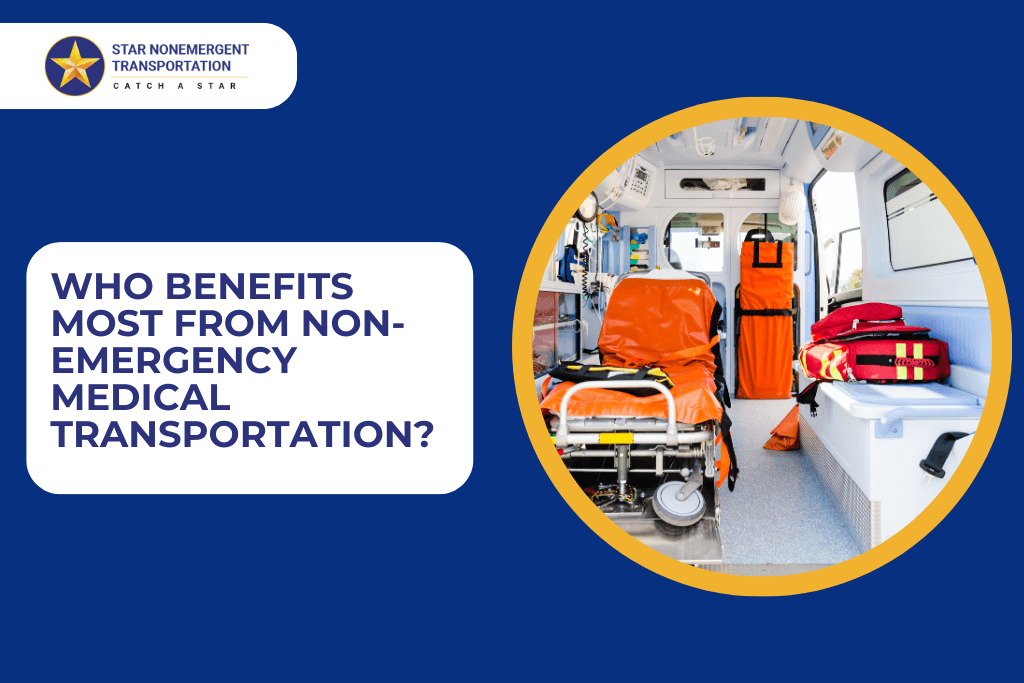
For students who use mobility devices, this is where transportation for special needs students and wheelchair accessible transportation intersect directly. A ramp-equipped vehicle isn’t optional; it’s the baseline requirement for a safe transfer. Our Wheelchair Transport service is built specifically for this, with securement systems and trained staff who know how to load, secure, and monitor a child throughout the ride, not just get them from point A to point B.
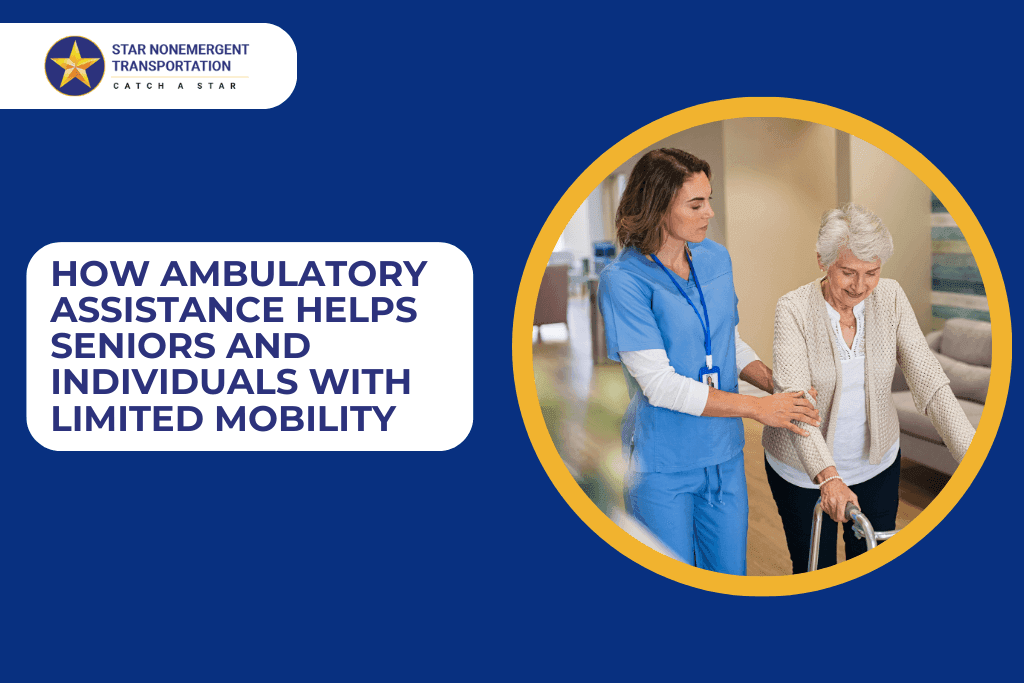
For children who need extra physical support but don’t use a wheelchair full-time, think of a student recovering from surgery, managing a balance disorder, or simply needing a steady hand getting from the door to the vehicle our Ambulatory Assistance service fills that gap, offering hands-on support without the need for specialized equipment.
Accessibility Isn’t a Feature it’s the Whole Job
A lot of transportation companies treat accessibility as an add-on. We treat it as the actual job. Every vehicle in our fleet is equipped and maintained to hospital-grade cleanliness standards, and our drivers are trained specifically in the kind of ambulatory transportation services that special needs families depend on securing equipment properly, communicating clearly with a child who may need extra reassurance, and staying alert to any change in a child’s condition during transit.
This matters just as much for students who don’t use a wheelchair as it does for those who do. A child with a sensory processing disorder may need a quieter vehicle and a calmer pace. A child with a seizure disorder may need a driver who knows what to do if something happens mid-route. True accessibility means building a service around the full range of needs a child might have, not just the ones that are visible including larger students who need extra room and support, which is why we also offer dedicated Bariatric Transport for added comfort and safety.
Long-Distance Care: When Specialists Aren’t Nearby
Not every specialist a child needs is located close to home. Families in Stanislaus and San Joaquin Counties sometimes have to travel well outside their immediate area for pediatric specialists, developmental clinics, or specific therapy programs and that’s where medical transportation long distance and medical transport services long distance become part of the back-to-school planning conversation.
Long-distance trips raise the stakes: longer time in the vehicle, more coordination with school pickup and drop-off windows, and a greater need for a driver who can keep a child comfortable over an extended ride. We offer seamless long-distance transport across the region specifically so families don’t have to choose between a distant specialist and a functioning school schedule. If your family has an out-of-town appointment coming up this semester, it’s worth scheduling that ride the same way you’d schedule a local one early, and with clear pickup and return windows built around the school day.
Caregiver Coordination: The Piece Nobody Talks About Enough
Here’s what doesn’t show up in most conversations about special needs transportation: the mental load it puts on caregivers. Parents of children with complex medical needs are often coordinating school staff, therapists, specialists, insurance, and now transportation on top of everything else raising a child requires.
A few things we’ve found make a real difference for caregivers during the school year:
- Standing schedules over one-off bookings. Setting recurring rides for therapy days means one phone call instead of a weekly one.
- A single point of contact. Case managers, school staff, and caregivers can all coordinate through the same transportation provider instead of re-explaining a child’s needs to a new driver every trip.
- Clear communication windows. Knowing exactly when a driver will arrive and being able to reach someone if plans shift takes one variable off an already full plate.
- Consistency of care. The same familiar process each trip helps children who don’t do well with unpredictability, and it builds trust between the driver and the child over time.
We work directly with case managers, school liaisons, and family caregivers to build this kind of coordination into a child’s regular routine, not just around isolated appointments. You can read more about how we approach these partnerships on our About Us page. And when a child’s routine calls for more than medical trips, a family outing, a social activity, or a visit to relatives our Non-medical Transportation service covers that too, using the same trusted process the family already knows.
What Does This Look Like for a Typical Family?
Picture a student who uses a wheelchair, attends school five days a week, and has physical therapy twice weekly plus a specialist visit once a month. Before school starts, that family can set up:
- A recurring wheelchair accessible transportation schedule for the two weekly therapy visits, timed around school pickup.
- A standing plan for the monthly specialist visit, booked in advance so it never conflicts with a school event.
- A backup plan for the rare long-distance appointment, arranged ahead of time through our long-distance service.
That’s three moving pieces reduced to one relationship: one provider who already knows the child, the equipment, and the schedule.
When to Use Emergency vs. Non-Emergency Transport?
It’s worth being clear about where our services fit. Emergency medical transportation ambulances responding to an active medical emergency is a separate system entirely, and any family facing a true emergency should call 911 immediately. Our services are for scheduled, non-urgent care: therapy, specialist visits, school-related medical appointments, and other planned trips. Understanding this distinction helps families use the right resource for the right situation, and it’s part of why NEMT providers like us exist alongside not instead of emergency services.
Planning Ahead for the Semester
The families who navigate the school year most smoothly are usually the ones who plan transportation the same way they plan the rest of the semester in advance, as a system, not appointment by appointment. If your child has a set of recurring therapy visits, a specialist relationship, or an upcoming long-distance appointment, now is the time to get that on the calendar.
We’d rather help you build that schedule in August than scramble to fill a gap in October. Explore our full range of services including Gurney Transportation for children who need to travel lying down check our FAQs page for common questions, or reach out directly to talk through your child’s specific needs.
Frequently Asked Questions?
1. What is non-emergency medical transportation (NEMT), and how is it different from an ambulance?
Non-emergency medical transport is scheduled transportation to and from medical care therapy sessions, specialist visits, dialysis, and similar appointments. It’s for situations that are important but not urgent. Emergency medical transportation, by contrast, responds to active medical emergencies and should always be reached through 911.
2. Can Star Nonemergent Transportation accommodate my child’s wheelchair or mobility equipment?
Yes. Our Wheelchair Transport service uses vehicles equipped with proper ramps and securement systems, operated by drivers trained specifically in safe transfers for children and adults who use mobility devices.
3. Do you offer recurring rides for weekly therapy appointments?
Yes. Many of the families we work with set up standing schedules for weekly or biweekly therapy visits so they don’t have to rebook every time. This is especially useful during the school year, when appointments need to fit neatly around class schedules.
4. What if my child needs support walking but doesn’t use a wheelchair?
Our Ambulatory Assistance service is built for exactly this hands-on help getting in and out of the vehicle and to and from appointments, without requiring specialized equipment.
5. Do you provide medical transportation long distance for out-of-area specialists?
Yes. We provide reliable long-distance medical transport services for families who need to travel outside Stanislaus or San Joaquin County for pediatric specialists or specific treatment programs, with scheduling built around school and caregiver availability.
6. How far in advance should I schedule transportation for the school year?
As early as possible. Setting up recurring rides before the semester starts helps avoid scheduling conflicts later, especially for families juggling multiple weekly appointments alongside a school calendar.
7. Who typically uses Star Nonemergent Transportation’s services for children?
We work with private-pay families, case managers, school liaisons, and healthcare facilities coordinating transportation for children who use wheelchairs, need ambulatory assistance, or require consistent transport to therapy and medical appointments.
Star Nonemergent Transportation provides reliable, compassionate non-emergency transportation across Stanislaus and San Joaquin Counties, including wheelchair transport, gurney transport, and ambulatory assistance. Don’t let transportation be a barrier to your child’s care.
Call us at (209) 214-6186, email info@starnonemergenttransportation.com, or schedule online to set up your child’s transportation for the school year. Address- 2020 Coffee Road Suite I-6, Modesto, CA 95355